The best brand messaging framework for your website and content
Published February 18, 2026
I talk a lot about SEO on my website and within my content, and that’s because it’s an essential pillar of content marketing. But the other, equally important pillar, is your brand. You can’t prioritize one over the other–you need both to stay visible and capture your audience’s attention.
That’s why my Content Strategy package includes an SEO audit as well as brand messaging guidelines that inform your overarching content plan. And if you’re reading this, you’re in luck, because I’m sharing the exact brand messaging framework I use for my clients! I’ve found it’s the most comprehensive method of building brand guidelines, so you always have a strategic direction within your content. Let’s dive in!
Explore:
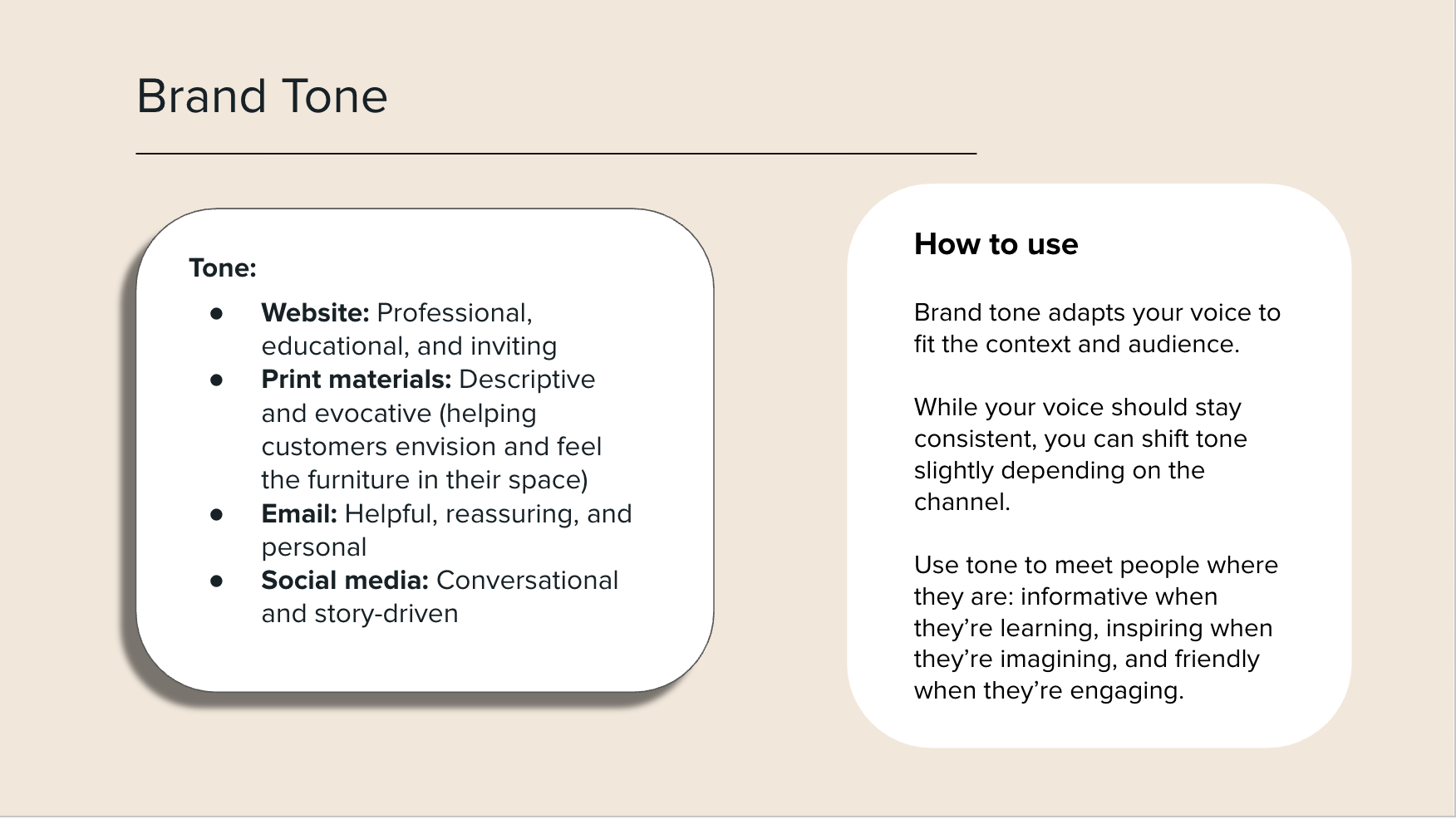
Note: To protect my work, all screenshots below include dummy text–they’re not accurate representations of real brand messaging elements, though they’re examples of what your brand guidelines could look like.
Mission & vision statements
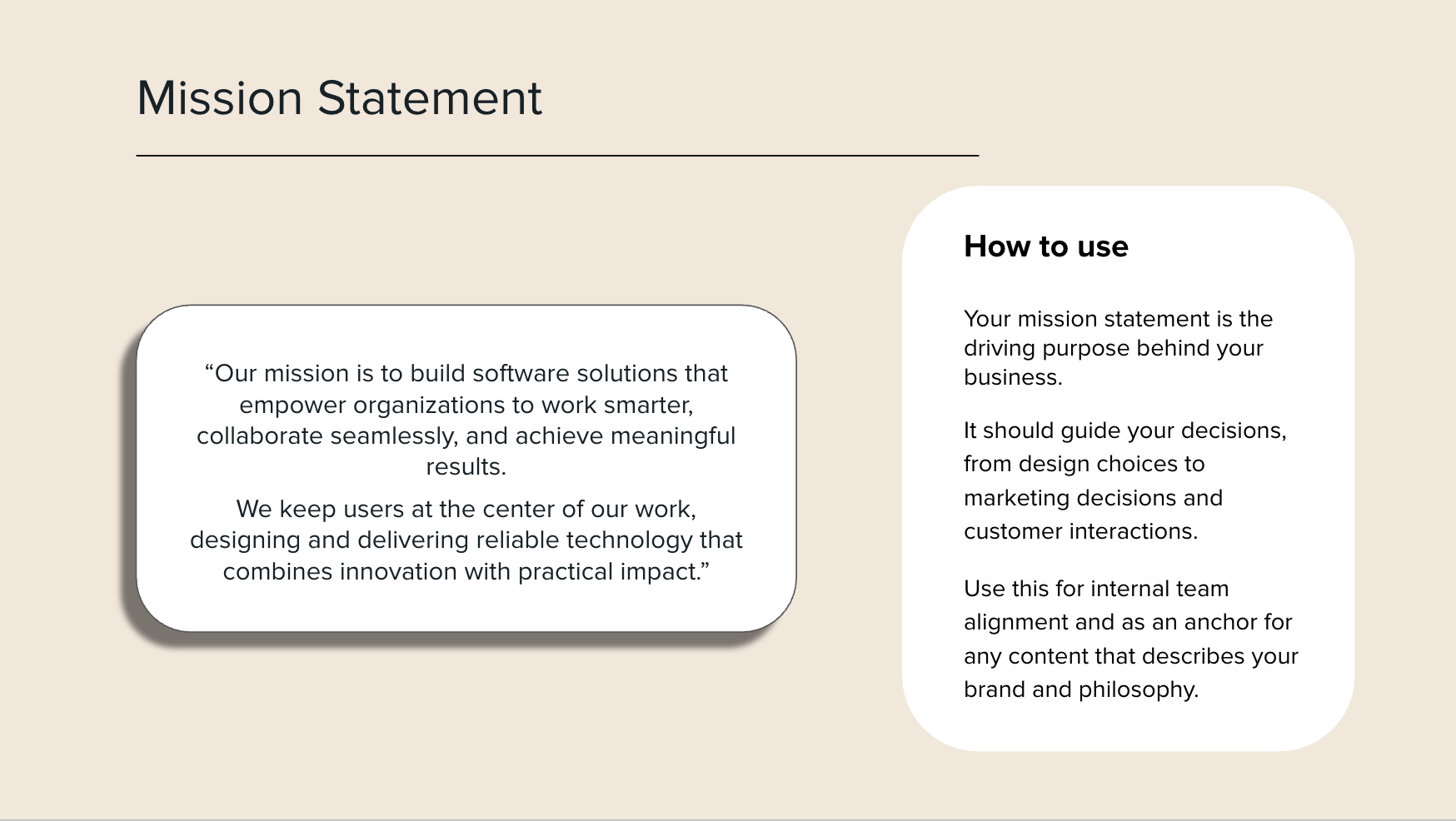
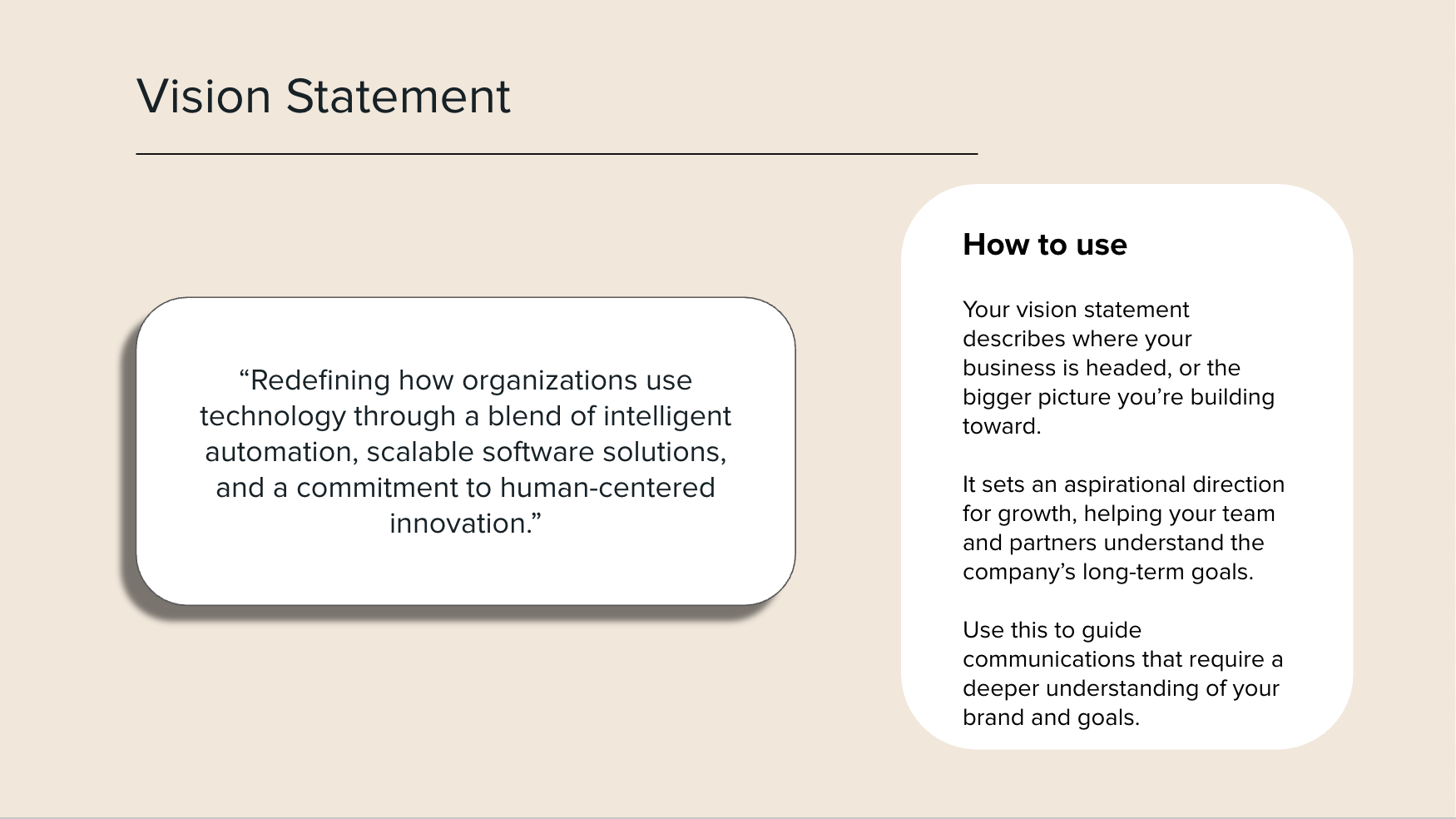
A mission and vision statement isn’t always included in brand messaging guidelines, but I like to include them for my clients to ensure consistency from the top. Both are more for internal use, but they’re so helpful for driving long-term decisions and team cohesion.
While your mission statement describes your business’s purpose, your vision statement is where you want to be in the future, or what you’re striving for.
Within your website, you can use versions of both in your About Me or other content about your brand philosophy.
2. Brand promise
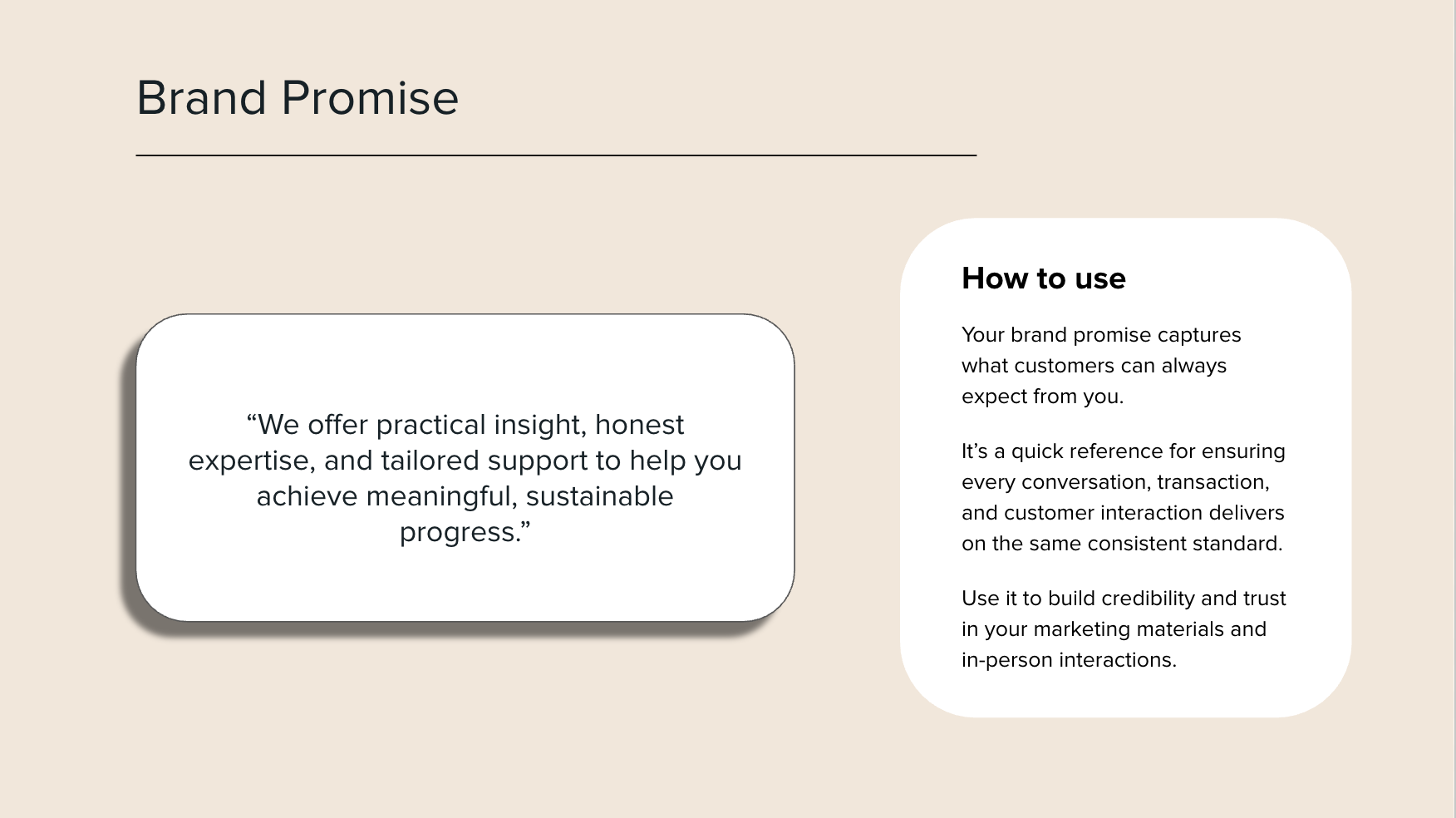
Your brand promise explains what customers can always expect from you. While your mission and vision are more about philosophy, this is about action–particularly within your customer experience.
3. Elevator pitch
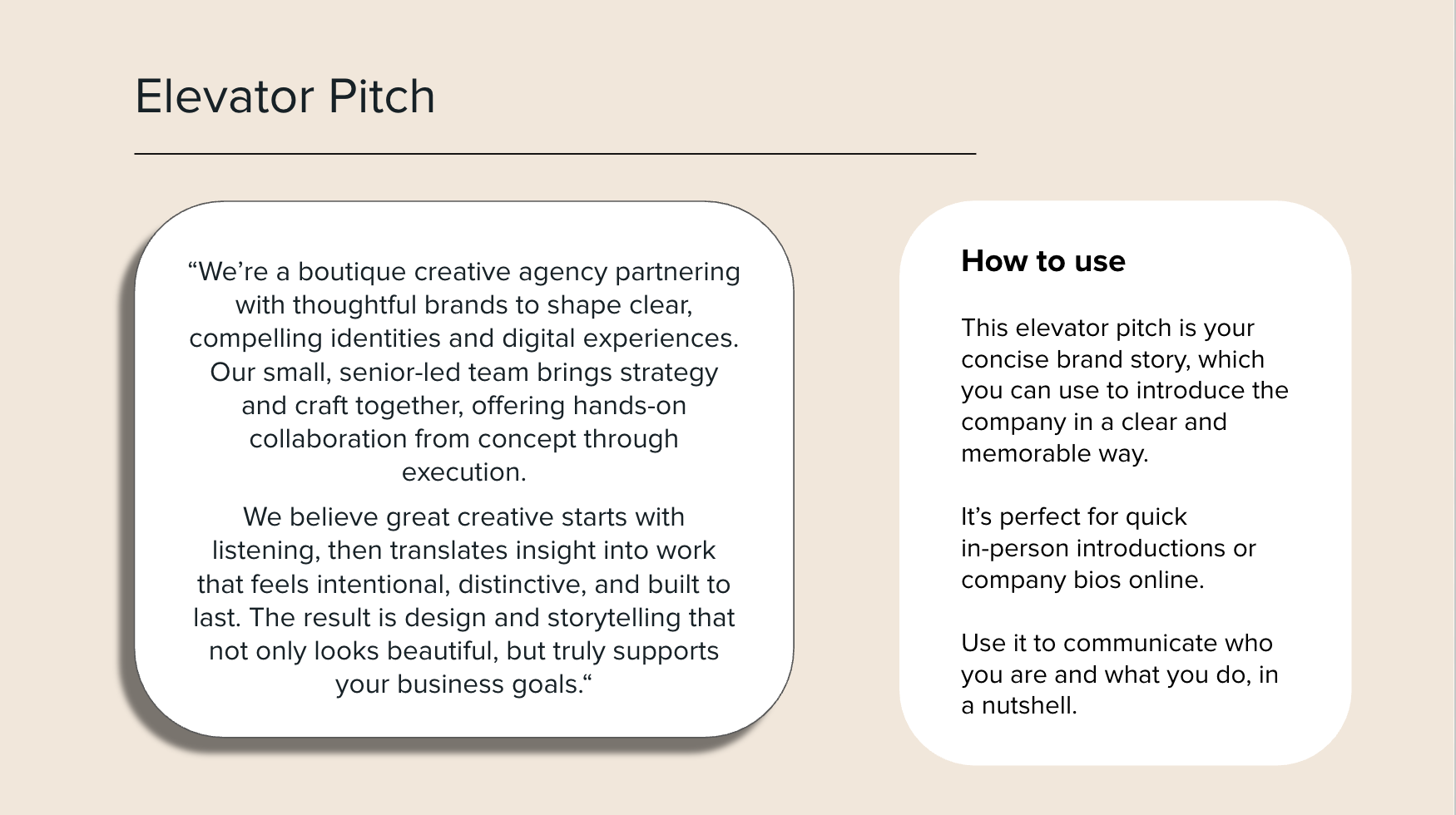
Your elevator pitch incorporates elements from your mission, vision, and brand promise, but makes it more actionable and about what you offer. I always feel that this is one of the most important elements of messaging guidelines, because a lot of businesses don’t have a clear way to explain who they are and what they do.
While the elevator pitch may be too lengthy to include directly on your website, you can take elements of it for your Home page and About page, and especially use it for in-person conversations.
4. Tagline
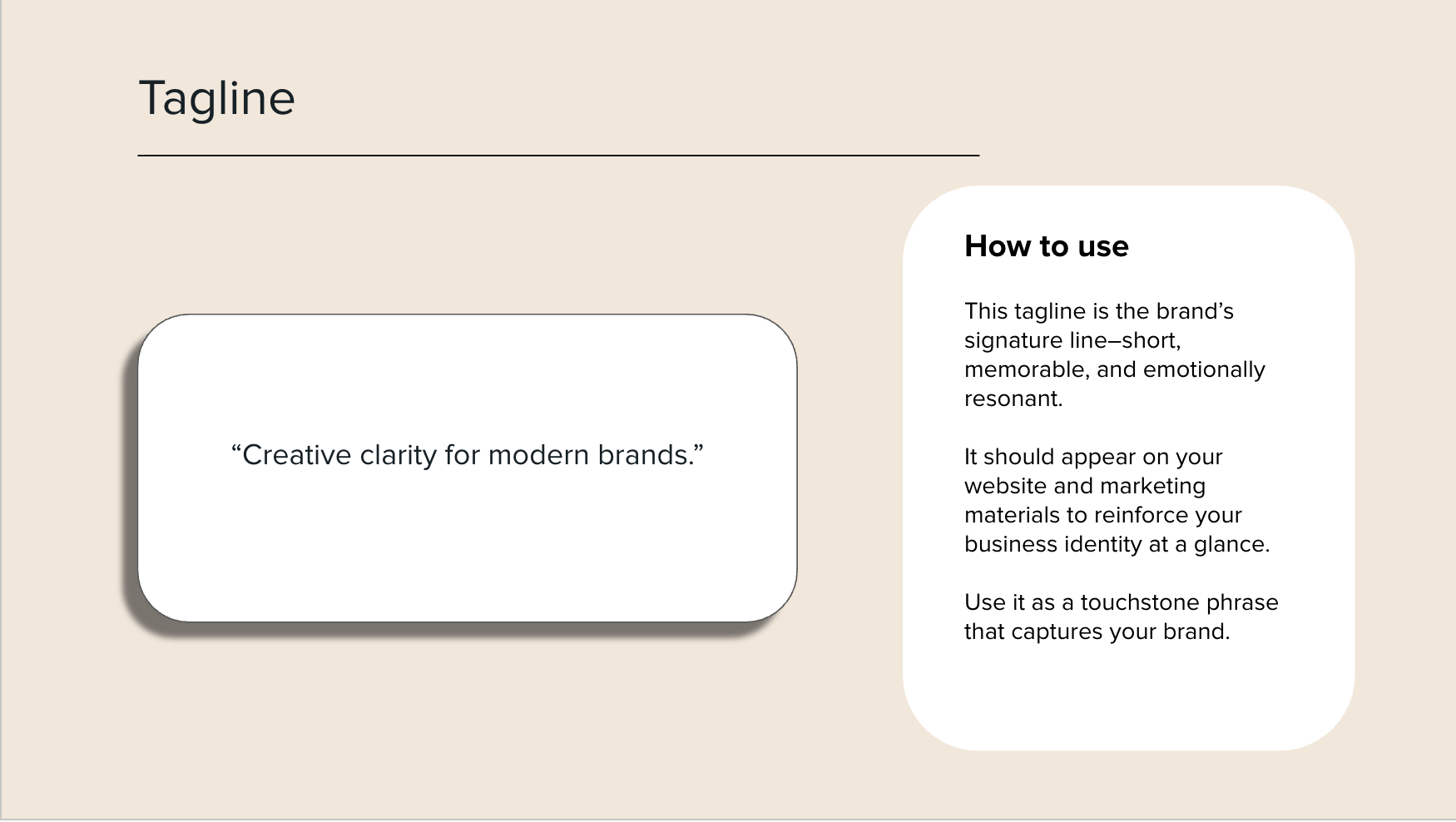
The tagline is a super short, catchy phrase that I recommend adding to your website homepage and throughout all of your channels. It doesn’t give away everything about who you are, but it’s a great summary that makes people want to learn more.
To create my clients’ tagline, I usually play with elements from the elevator pitch and value propositions (more on those below).
5. Value propositions
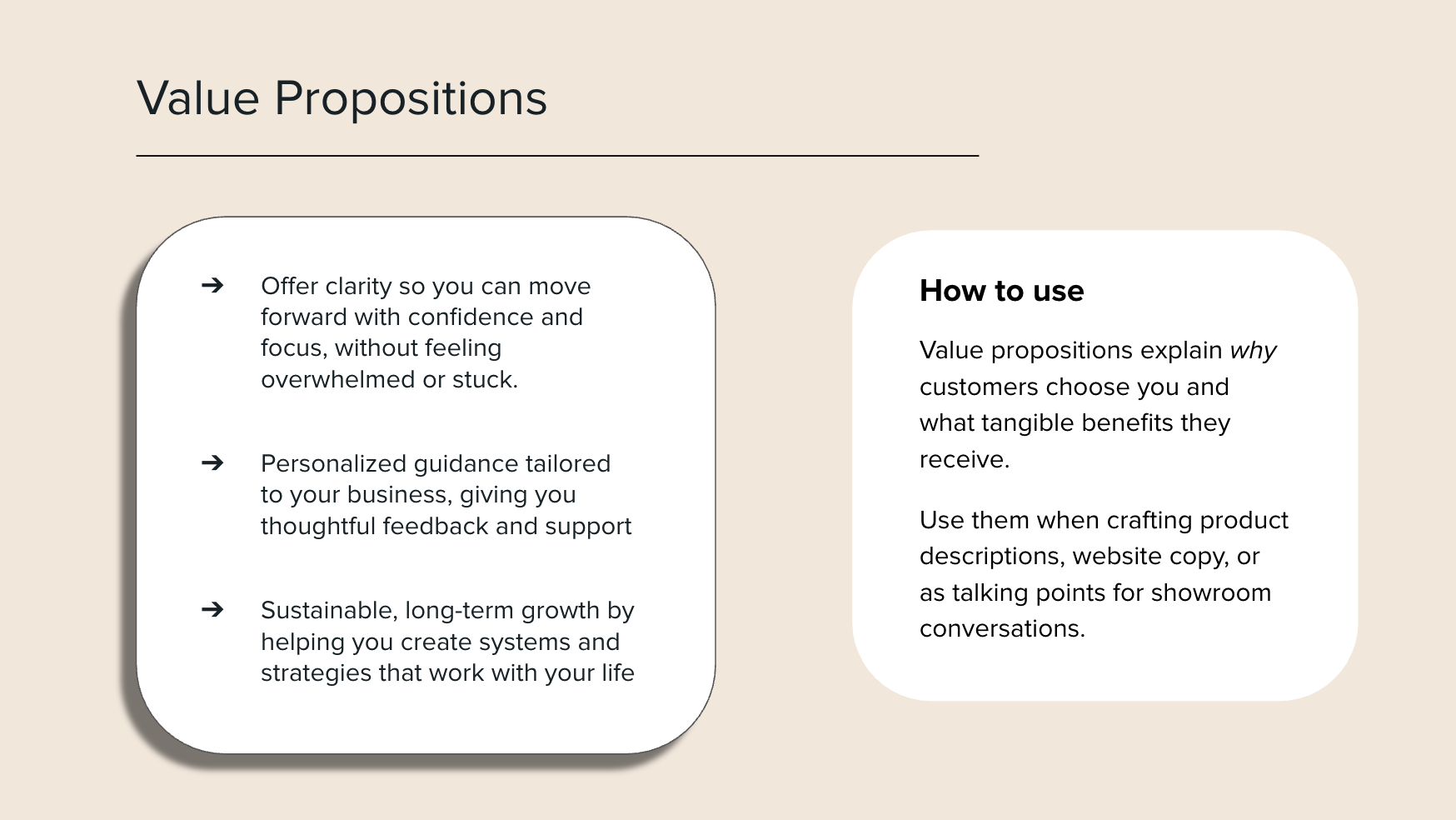
Your value propositions should explain the benefits customers receive from choosing you and your products or services. It’s not what you offer, but it’s how it impacts your customers.
These are especially helpful to use throughout your website copywriting, particularly within product or service pages and other sales content.
6. Differentiators
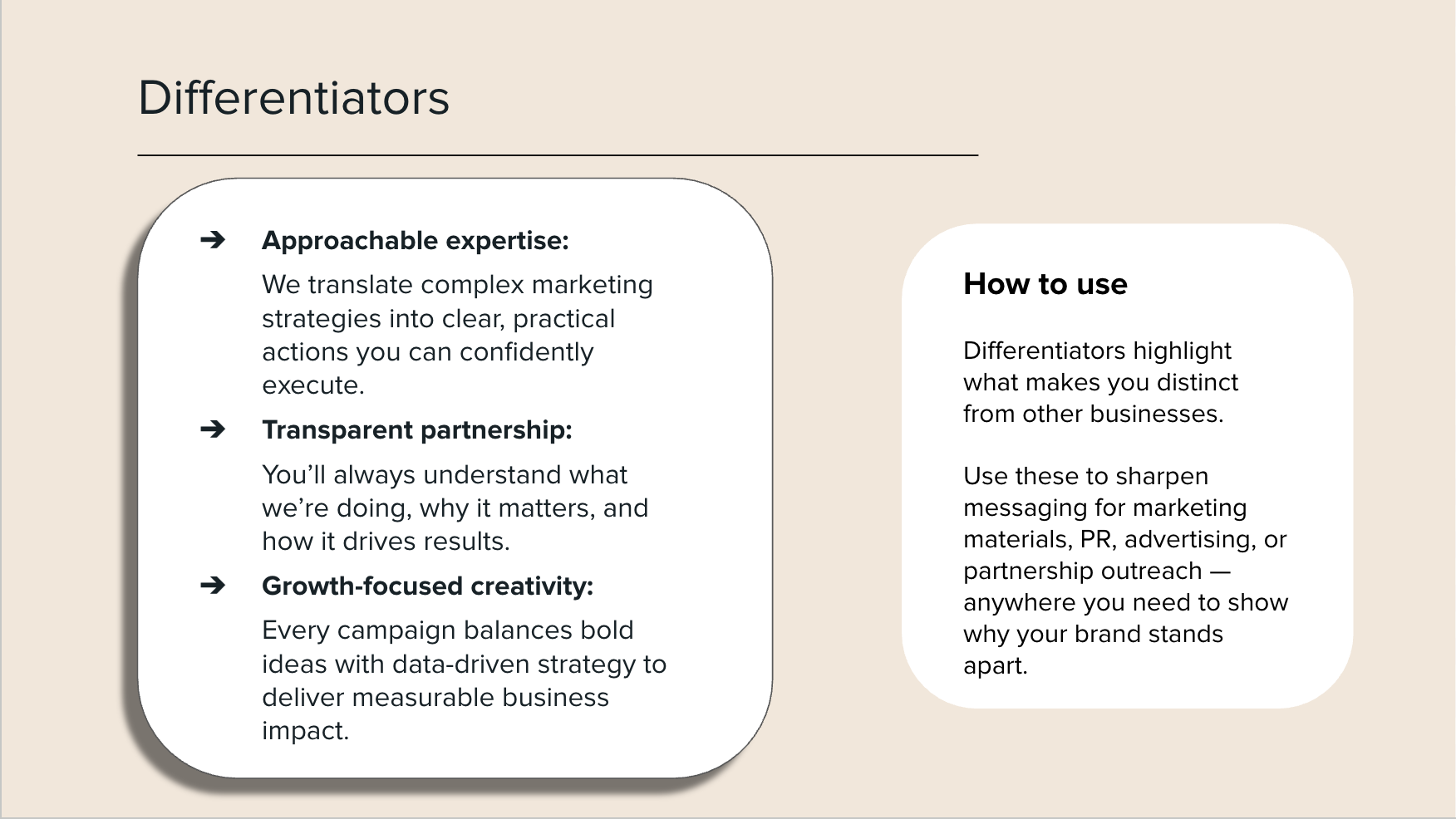
If you’re paying for brand messaging guidelines, a lot of providers will either include value propositions or differentiators, not both. But I feel both are important to determine because they do speak to different elements of your brand.
While value propositions are unique to your business, your differentiators take into consideration your industry and market. Within my Content Strategy package, I include a competitor audit and SWOT analysis of your business, which helps inform the differentiators.
Similar to value propositions, though, you should also use your differentiators wherever you’re trying to sharpen your copy, especially within sales content.
7. Brand voice & tone
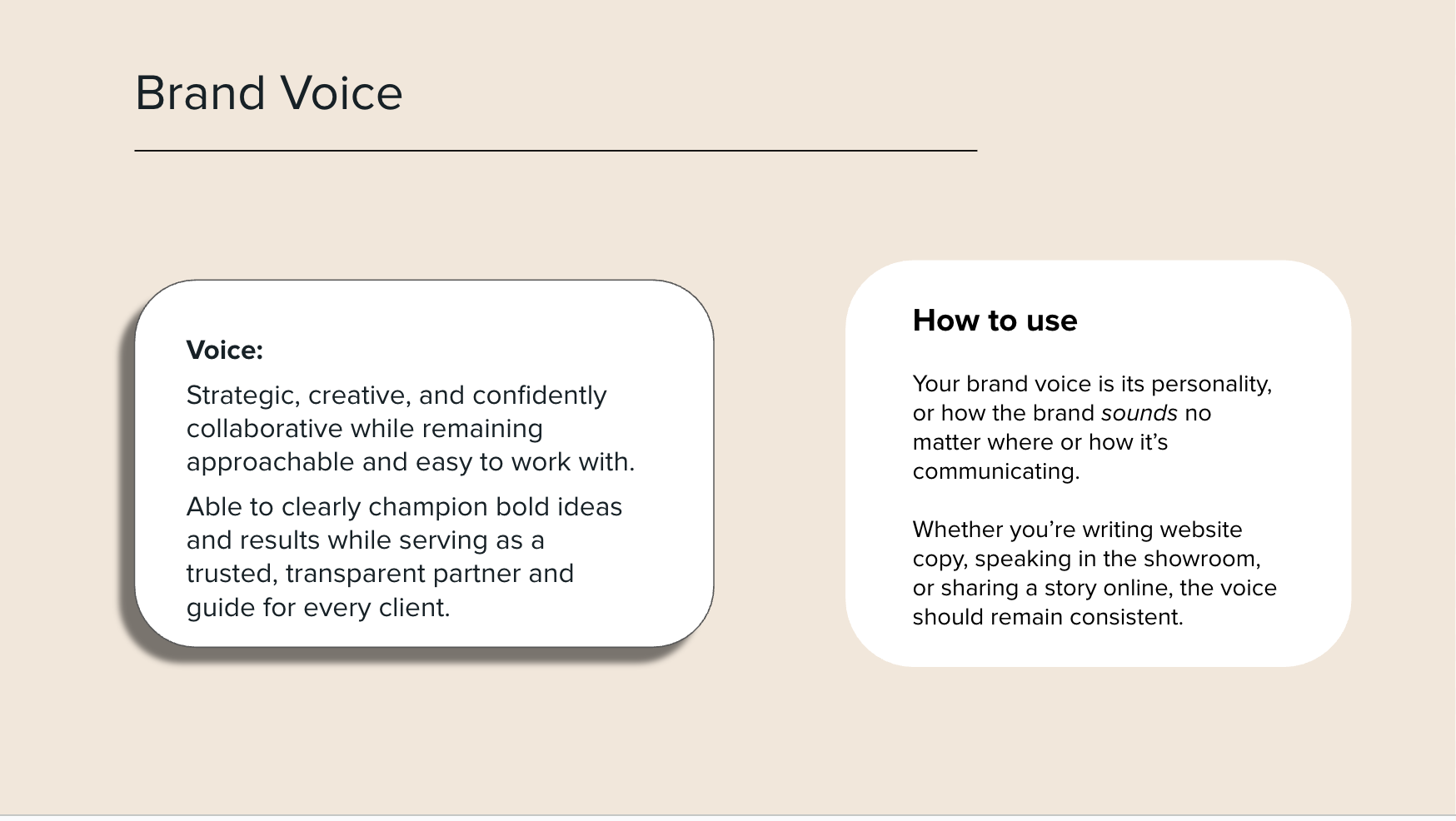
Separating your brand voice and tone can feel like a ton of information, but I do think they should be distinct from each other. While your voice is your consistent brand personality, your tone can shift depending on where your content lives. You wouldn’t communicate exactly the same on social media as you would within your sales page, for instance.
It can be annoying to continuously remind yourself of brand voice and tone guidelines as you create copy and content, but it’s one of those things where it eventually becomes second nature.
8. Messaging pillars
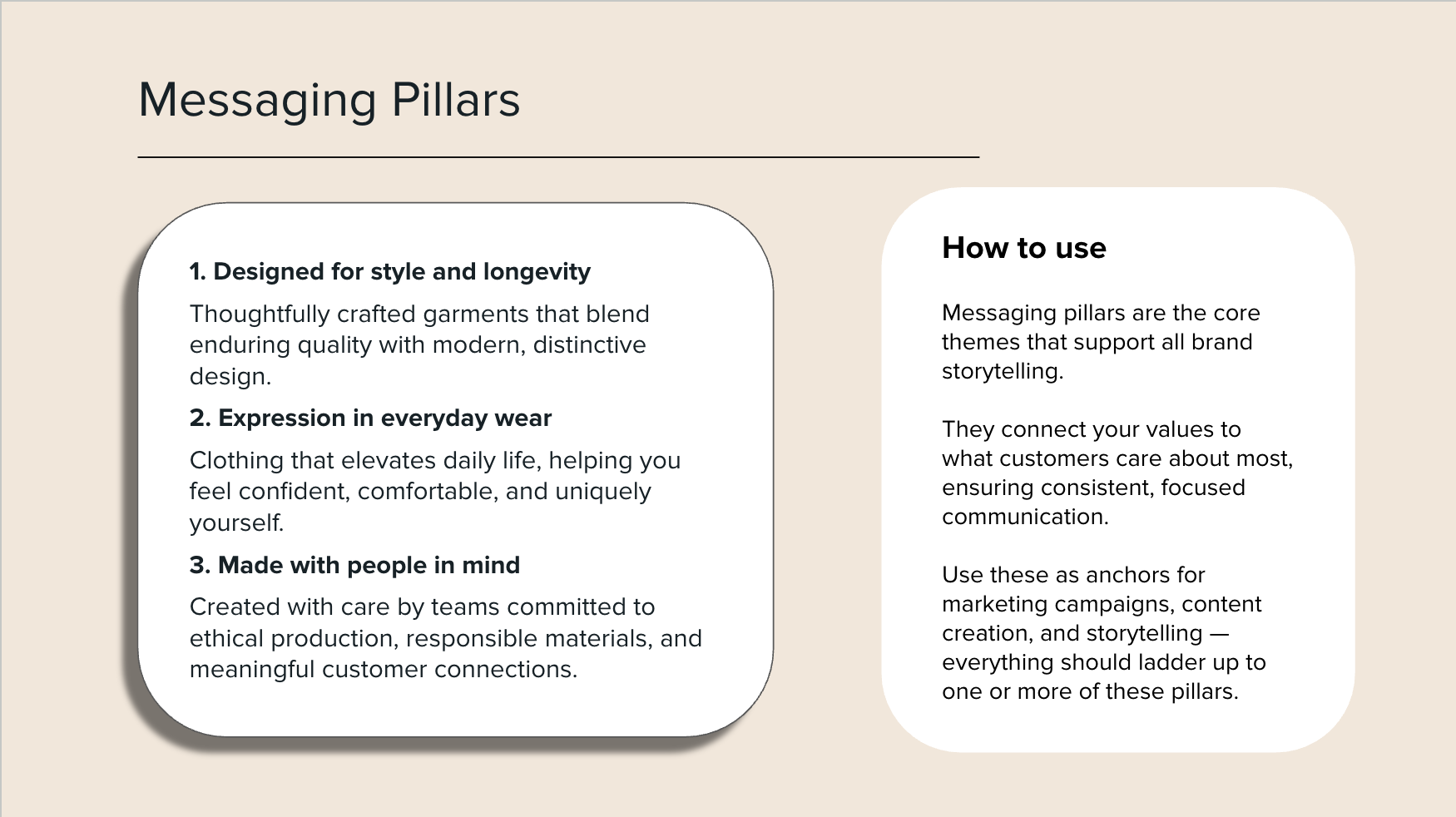
Lastly, your messaging pillars act as a nice culmination of everything in your brand messaging guidelines. These are one of the elements I find myself returning to the most when it comes to content and campaign planning, because they can serve as anchors for new ideas.
They’re essentially the primary messages that you want to keep communicating to your audience, whether it’s on your website or within your email marketing and social media. Unlike topics, they’re overarching messages that can apply anywhere.

How do I put together a brand messaging framework for my business?
It can be tempting to just ask ChatGPT to create all of this for you, but resist that urge! With the amount of time it would take to feed an AI tool everything it needs to know about your business, you really might as well invest in human work. After all, your brand needs to connect with other humans, not AI bots.
It is a lot of work, but you can take it in parts. I like to start with an initial brand exploration with my clients, which you can also do for yourself. Ask yourself who you are, who you serve, what you offer, and how you want to stand out. It’s also really helpful to have a list of descriptors you want associated with your brand.
From there, conduct a competitive analysis to see how other businesses in your market are positioning themselves. This can help you better understand how you can differentiate and what messaging will set you apart. I also like to conduct a SWOT analysis of my clients’ businesses to really identify what’s working and what isn’t.
Next, put together your ideal customer profiles. Having these on hand will help ensure your messaging is directed toward them.
After that, take all of the insights you’ve learned and start working on each piece of the messaging guidelines.
How do I actually use my brand messaging guidelines?
Once you have your messaging guidelines in the form of a document or a deck, it’s easy to save them in your Drive and never look at them again. But here’s how you can use them consistently throughout your business operations and marketing:
Employee and team onboarding: Share your guidelines with each new employee to make sure they’re on the same page and know how to communicate about your business.
Copywriting: Refer to your brand voice & tone, value props, differentiators, and messaging pillars whenever you’re updating or creating new content (I promise you won’t always have to do this, but it helps to make it a habit!)
Content ideation: Use your messaging pillars and value props to think of new campaign and content ideas.
Marketing campaign planning: Use your tagline and messaging pillars to guide catchy campaigns.
Within sales conversations: Use your elevator pitch, brand promise, and differentiators to make it clear why you’re the best choice.
I need help with my brand!
You have the framework, but creating your brand messaging framework and implementing them is a whole other story, I get it. That’s why I’m here to help! If you’re interested in more cohesive brand guidelines for your website, check out my Content Strategy package.
I combine SEO research with competitor analysis to put together your ideal customer profiles, target keywords, brand messaging, and a starter 90-day content plan and calendar to send you off on the right foot.
If that’s not quite what you’re looking for, I can also work with you on a custom package. Contact me to chat about your needs!