
Harry’s Room
SEO, Content & Brand Strategy
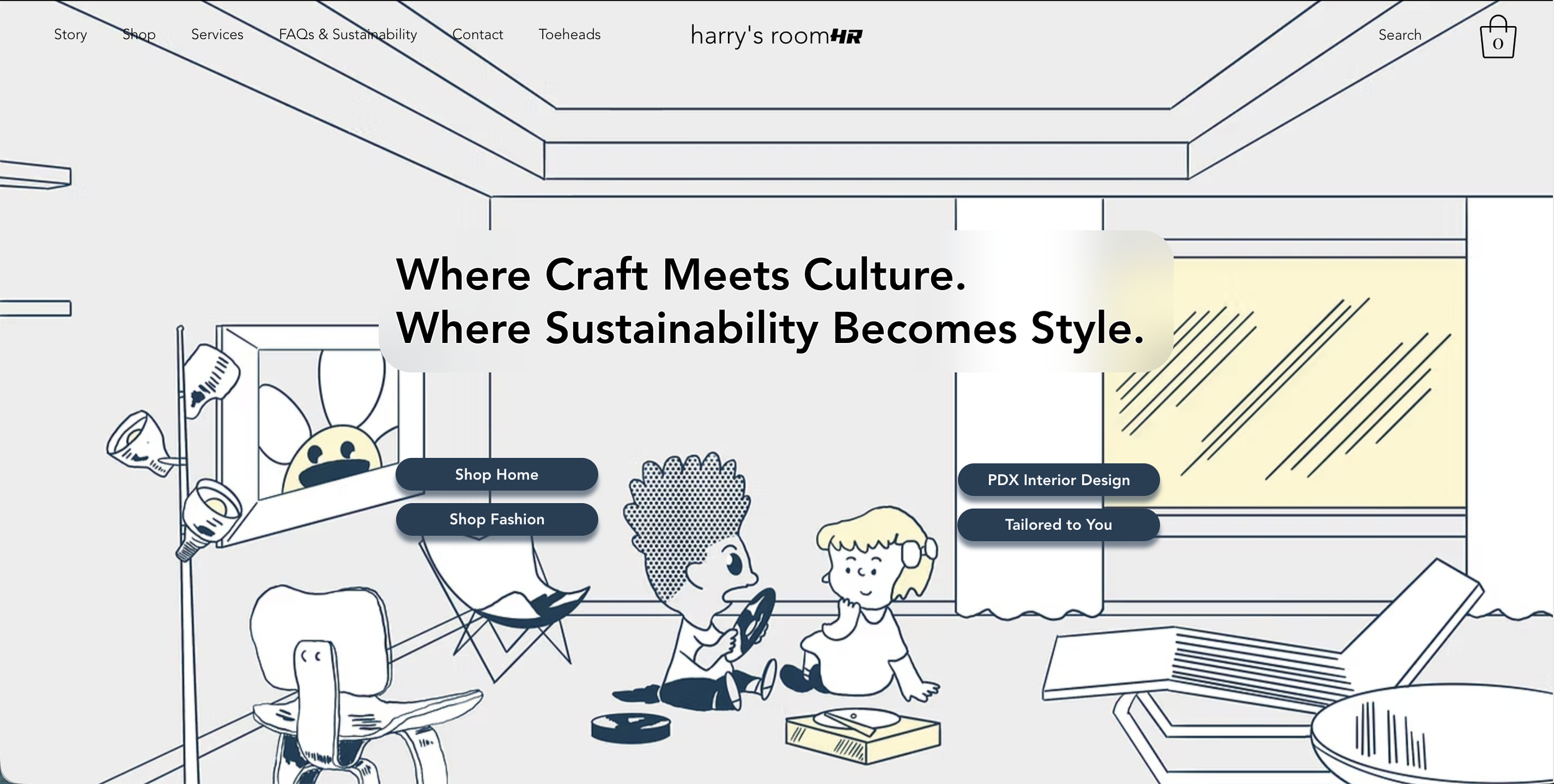
About Harry’s Room
Harry’s Room is a fashion and interior design studio based in Portland, Oregon, and owned and operated by Harry Armstrong. As an independent business owner with a strong background in design, sustainability, and culture, he offers both products and services to his target audiences. On the service side, Harry provides alteration and tailoring as well as commercial and residential interior design. Within his online shop, he sells sustainable, high-quality clothing and home goods.
What Harry’s Room needed
When I first met with Harry, he was operating mostly with customers in his existing network and from word of mouth. He was ready to expand and finally start growing online to reach his ultimate vision of becoming a nationwide, heritage brand.
He had an existing website, but no guidance on what content to create or how to achieve and measure SEO. He needed a strategic roadmap to better reach his audiences and start communicating more effectively about all of his products and services.
The needs:
The project
To start, I looked into the existing Harry’s Room website analytics. I saw that his site health wasn’t performing well, and there was a clear opportunity to start ranking for more local and commercial-intent keywords.
Part of his package included taking care of priority technical tasks, so a large part was dedicated to improving his site health and ensuring he had a baseline for SEO: metadata, proper redirects, compressed files, and more.
Among his competitors, Harry had clear differentiation with a strong commitment to community and culture, but it would be important to delineate the variety of products and services, since he could target very different audiences with each offer.
To develop proper messaging for his distinct audiences, I first created ideal customer profiles for each: The Apparel Shopper, the Residential Design Client, and the Commercial Design Client.
From there, I put together his brand messaging, which included a new mission statement, vision statement, brand promise, tagline, elevator pitch, value props, differentiators, tone and voice, and messaging pillars.
To further delineate his shop and services, I also provided recommendations to update his site architecture and make his site easier to navigate for users with specific needs.
Because Harry was looking for a thorough roadmap, I also put together a content plan and a 90-day Q1 content calendar—each based on the insights and strategy I had developed. All in all, Harry walked away with the following:
The work:
SEO audit
Competitor audit
Ideal customer profiles
Brand messaging
SEO & AIO best practices
Proposed target keywords per page
Priority technical tasks resolved
Q1 content calendar that included blog ideas, case studies, page updates, and optimizations
The results
After I delivered Harry’s final strategy and completed his technical tasks in January 2026, he immediately started updating his site with my recommendations. He updated his site architecture to better delineate his shop, tailoring, alteration, and interior design services. Then, he made site-wide updates to refresh his copy and incorporate the updated brand messaging as well as the target keywords I selected.
Finally, he’s added more content to his site to strengthen his brand, like FAQs and his Story. Paired with the SEO optimizations, this content is helping him further stand out and capture his audience in such a competitive industry.
The numbers (as of June 2026):
Health score improved from 19 to 98
7% increase in SERP impressions
35% increase in clicks from Google
46% increase in total website sessions